In Conversation with Polly Rusyn
On what can be taught in street photography, and how to prepare for a moment you can’t plan.
Text by Vica Rosario / Substack
I met Polly a couple of months ago through a German street photographer we both know. Polly had come to Thailand for a month or two but ended up staying more than five. We had planned to shoot together in Chinatown, but we got caught in heavy rain and never managed to take a single frame that day. We did get to know each other, though, and we instantly bonded when we finally found shelter, both soaking wet, only for the rain to stop the moment we got there. After Bangkok, Polly was off to Vietnam, then Kuala Lumpur, and as I write this, she is in London, about to leave for Latin America.
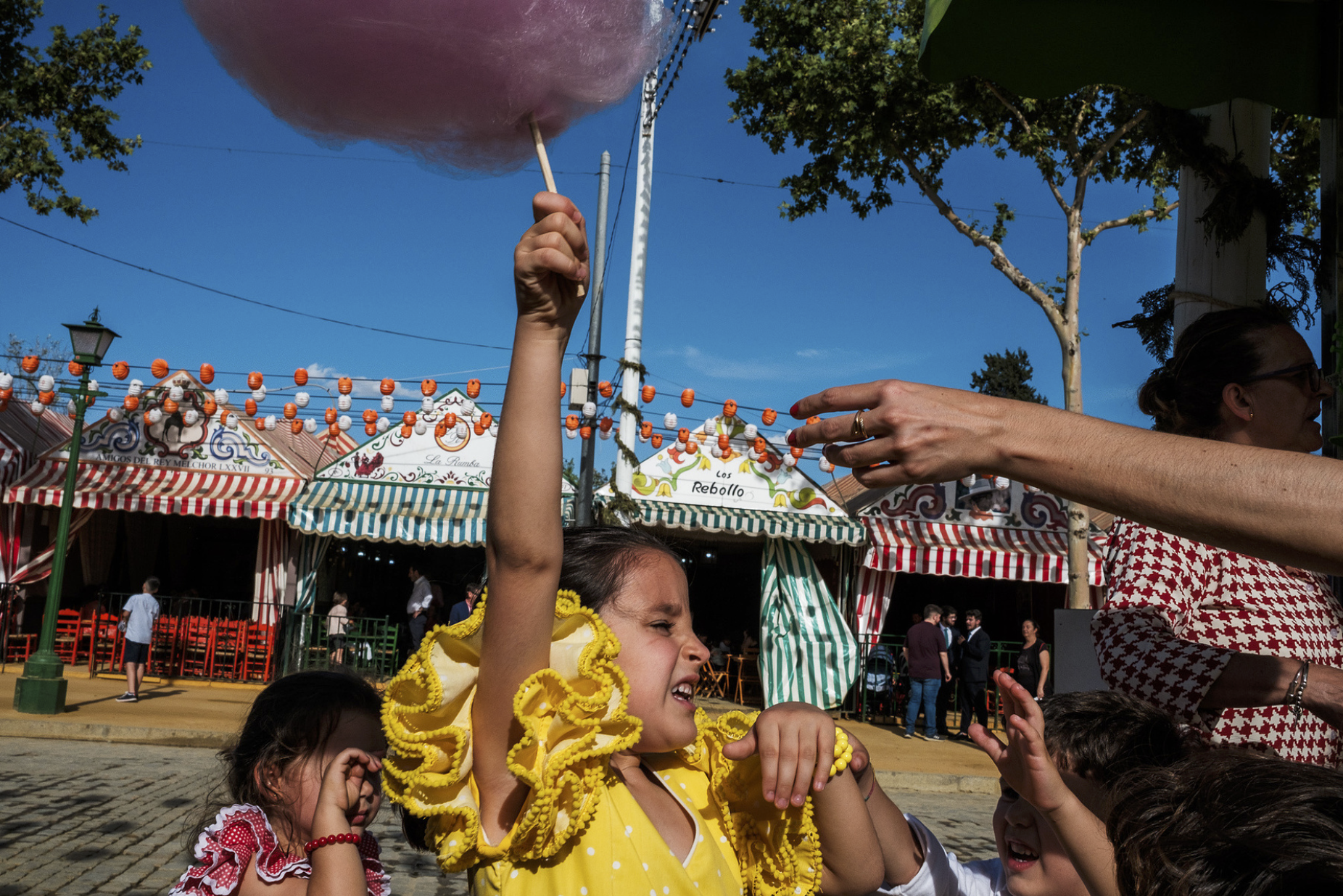
She shoots in color and has been teaching street photography for about a decade. She founded the Department of Street Photography, has published books about how to approach street photography, and has led workshops around the world. Her own photographs were what made me want to talk to her, though. She often works in hard sunlight, with deep shadows and very tight framing. We discussed one photograph from Seville that, to me, is one of those rare candid pictures where everything comes together so perfectly that it looks staged. She describes a scene as a jigsaw with most of the pieces moving. She also believes that everything about street photography can be learned and that talent only gives you a head start. I wanted to know what that means in practice, how she teaches people to photograph a scene like that, and whether there is anything she has found she cannot teach.
We spoke over video last week, with Polly in London and me in Bangkok.
Our conversation has been condensed and edited

You meant to be in Bangkok for a month or two and stayed five, then Vietnam, then Kuala Lumpur, and Latin America is next. You are always moving. What does living on the road do to the way you photograph, and to what you photograph?
It often surprises people, but I’ve never been an everyday shooter, or even a regular one. I shoot mainly before a weekend workshop, while I’m doing a recce, and then I’m out all day with a camera. Otherwise I don’t walk around with one, and I don’t even think about it every day. It’s very concentrated, in bursts.
As a foreigner in a foreign city I feel more invisible, and everything is more exciting and interesting. But I’m very aware not to confuse new, foreign, exciting and interesting with something that would actually make a good photograph. You still need a story, you still need the light, you still need the moment. I warn people about this at something like the Feria del Caballo: don’t get so excited about a horse or a woman in a gypsy dress that you just take the picture and go, “Oh my God.” You have to look beyond the foreignness to see the photograph.
You’ve said that color is a subject in its own right, and that a scene is a jigsaw with most of the pieces moving. Walk me into one of your own photographs. What were you actually doing in the seconds before it existed?
© Polly Rusyn
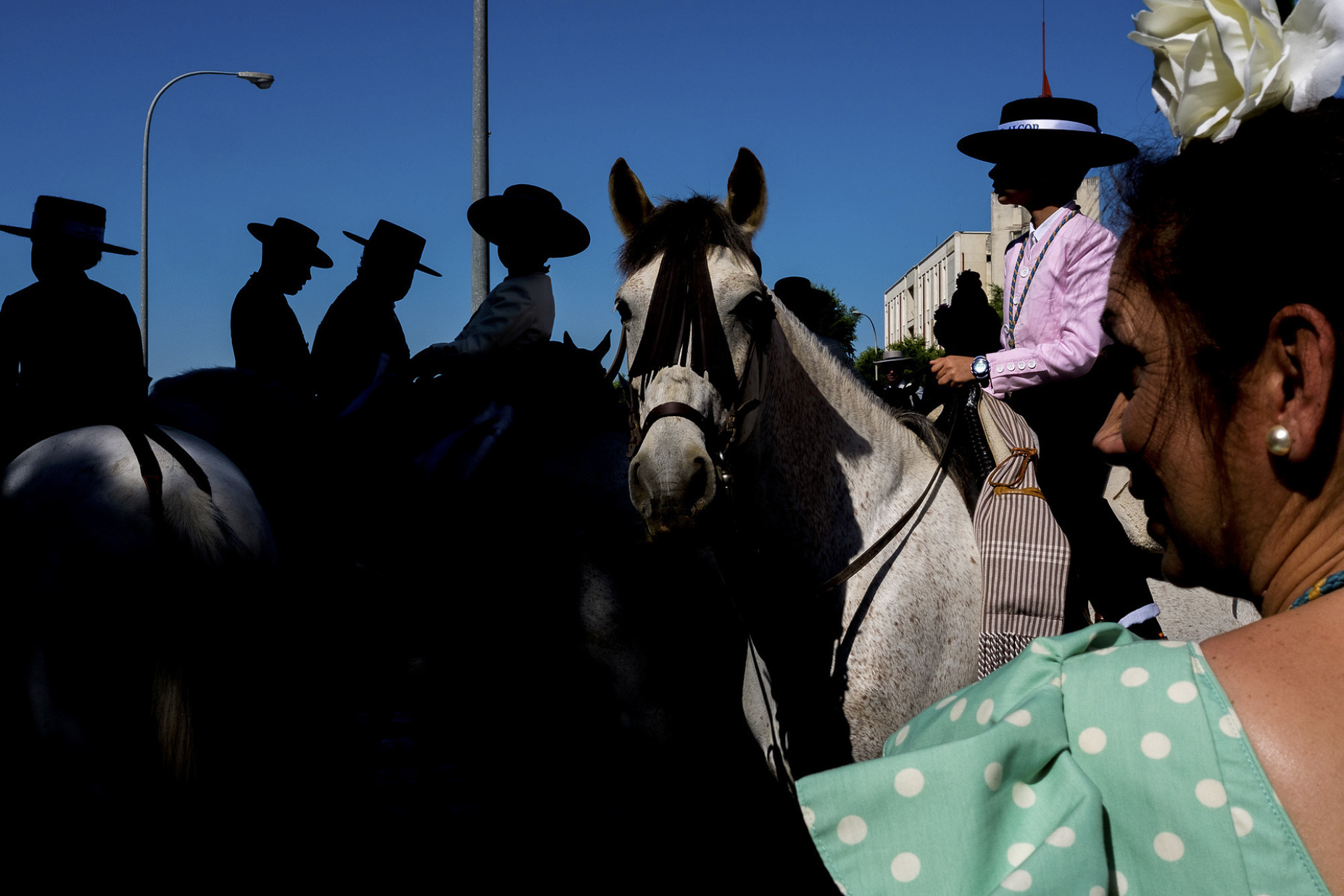
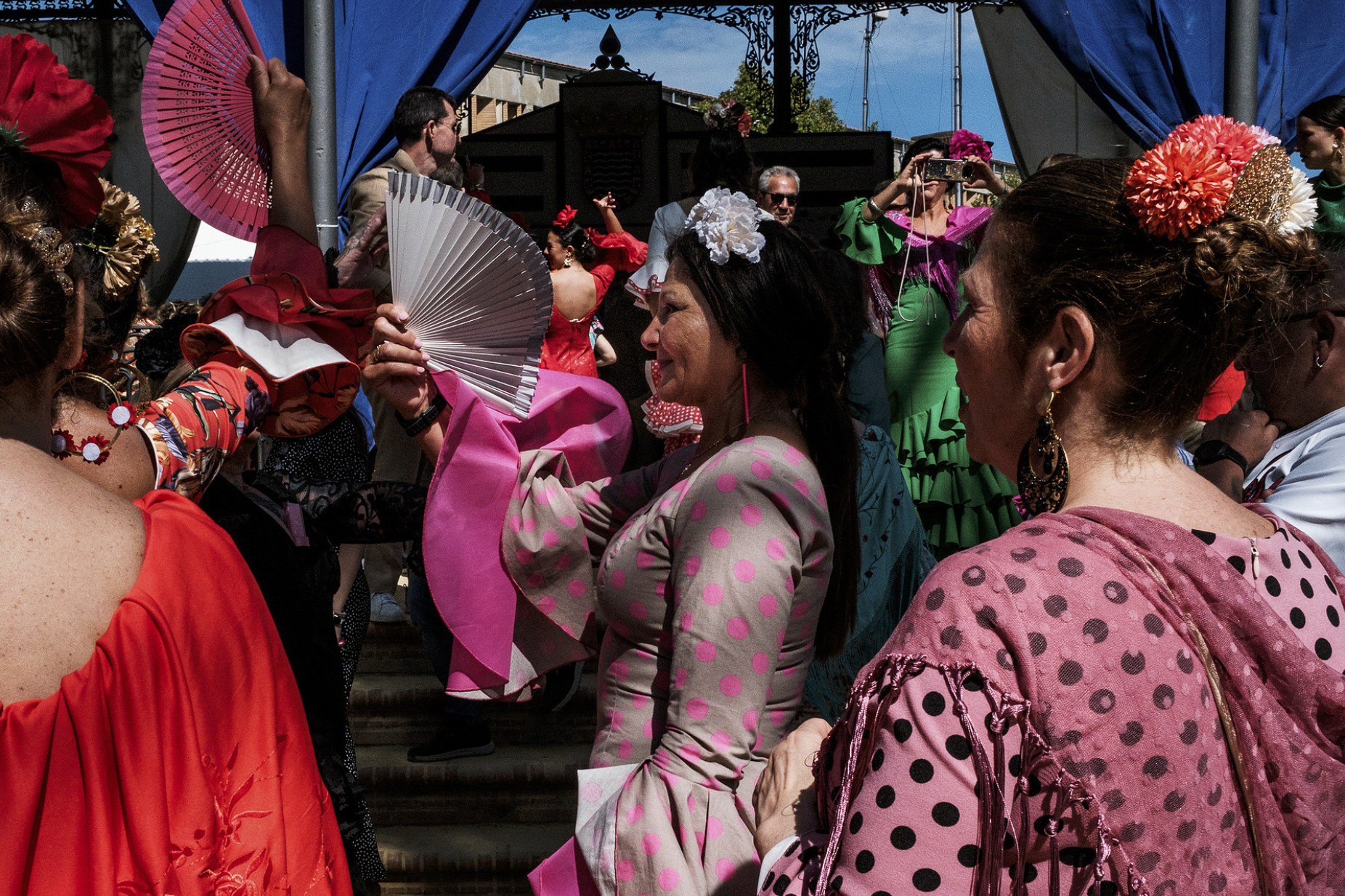
This is probably my best known, and maybe my most successful, picture, and it was completely accidental. I was in Seville before a workshop, and the place I was staying told me a pilgrimage was starting in the city that morning. I rushed out and came across this massive parade: people on horses, women in gypsy dresses, horses and carts, all about to cross the desert for three days and three nights to reach a little town.
My idea at the time was that I really wanted to photograph silhouettes in hats. We’ve all been through that phase. That was my very narrow focus, and I was walking along, failing at it, until the whole parade stopped on a corner, this very corner, and there they were. I took the shot. Then I noticed that as well as the silhouettes there was a boy on a horse, lit in the sun. Good contrast. So I played with that, splitting the frame fifty-fifty. And I kept thinking: what else? What else can I include? I hadn’t photographed any of the women, and one was standing right next to me. I took one step back and one step to the right, so I was directly behind her. She was looking forward, the horse was looking out of the frame, the silhouettes were all moving. And then, in one glorious moment where time stopped and I lost awareness of my body, the silhouettes separated, the woman turned her face into the frame so I had her profile, and the horse turned to look directly at me.
I knew, without even looking at the picture, that I’d got it. I have rarely felt that feeling, of being disembodied.
It was one idea leading to another, leading to me asking, what else? Street photography is a jigsaw puzzle where you don’t know what the finished picture is. There’s no box with the picture on it to follow. You just have all the pieces, and you have to position yourself, or change where you are, or choose the moment, and complete the picture.
That’s working a scene, and it’s how most of my own photographs come together too, when they come together at all. Are there photographers who can read a scene and get it in one shot?
The more you practice, and the more ideas you have about composition and moment and how they combine, the quicker you can read a whole scene. I think you can reach a point where it’s almost no longer a conscious process. You hit the shutter because your subconscious has already pieced it all together.
All those failures along the way are lessons. They go into the how-notto pile, which has its opposite, the how-to pile, and your subconscious is constantly putting the pieces together. It’s like when you take a photo and later notice a small detail in it that is unreal. There’s an Alex Webb picture, with a boy spinning a ball on his finger, and that’s what had his focus, yet later he noticed he also captured a ball falling through a baseball hoop in the background. He didn’t see it at the time. His subconscious must have.
I do believe the subconscious sees things we consciously don’t, and that it can be your assistant in taking pictures. But you have to give it enough information to know what to look for. That’s where practice comes in: training your observation, your composition, your timing, working the scene, being able to anticipate and imagine and bring it all together in what feels like a split second. We’re constantly processing far more visual information than we’re aware of. When you train yourself to see and think differently, you stop relying on luck. You can start with an idea and it can turn into something else, but you’re always in better shape starting with an idea than with none. At least you have one foot on the ladder.
© Polly Rusyn
You teach street photography as a skill, with methods anyone can practice. But the photograph happens in a second you cannot plan, in front of something you did not arrange. So is it a craft, and if it is, can you teach the part that cannot be planned, or can you only point at it?
You can’t plan for the moment, but you can train your readiness for it.
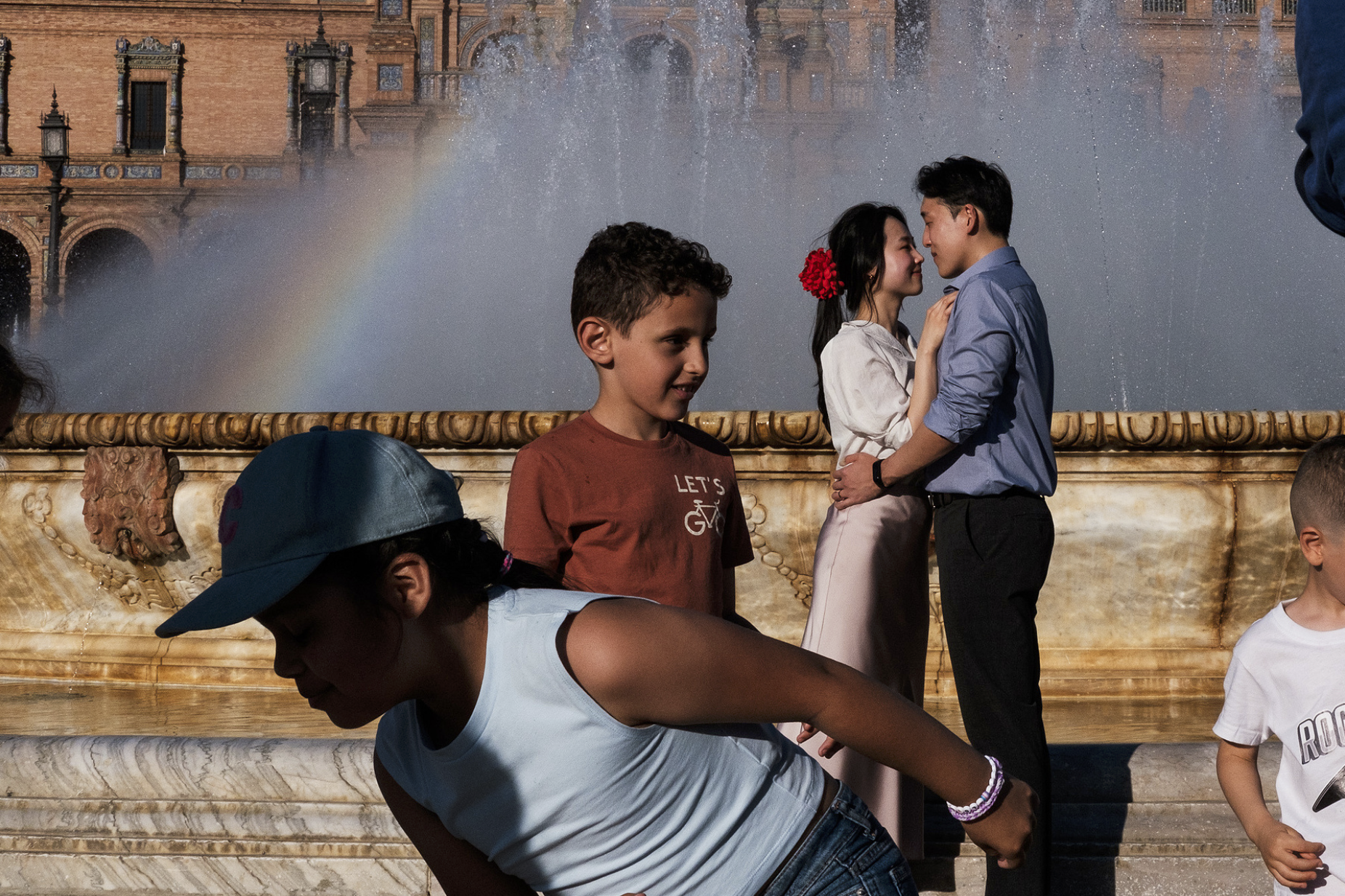
Street photography is candid, yes. Everything is outside our control. But we have far more control than we think. We choose the background. We work with the light, whatever way it’s there for us. We look for story. We can reposition ourselves relative to the scene, which changes how everything lines up. And we choose the moment we press the shutter. That’s a lot of control in something that seems out of our control.
Then there are the banks of ideas. I’ve been there as a beginner, out in the street with my camera, not knowing what to take pictures of. Now that seems ridiculous, because we can build banks of ideas: things to look for, things that tell stories in frozen moments, and ways to compose the moment we’re choosing to freeze. When you’ve developed all of that, and you know how much control you actually have, that’s the readiness you’ve trained for. Really, it’s about brainwashing yourself so you’re ready for any possibility.
It’s practice and repetition, like any competence. Natural talent is only a head start. It doesn’t mean you cross the line first. I honestly believe that everything is learnable. It’s the hill I will die on. What learning requires is desire and passion. If you’re not good at something but you have both, you’ll keep going: training yourself, making mistakes, learning from them. You need passion and desire more than you need talent.
© Polly Rusyn
How long does it take to build a good bank of ideas?
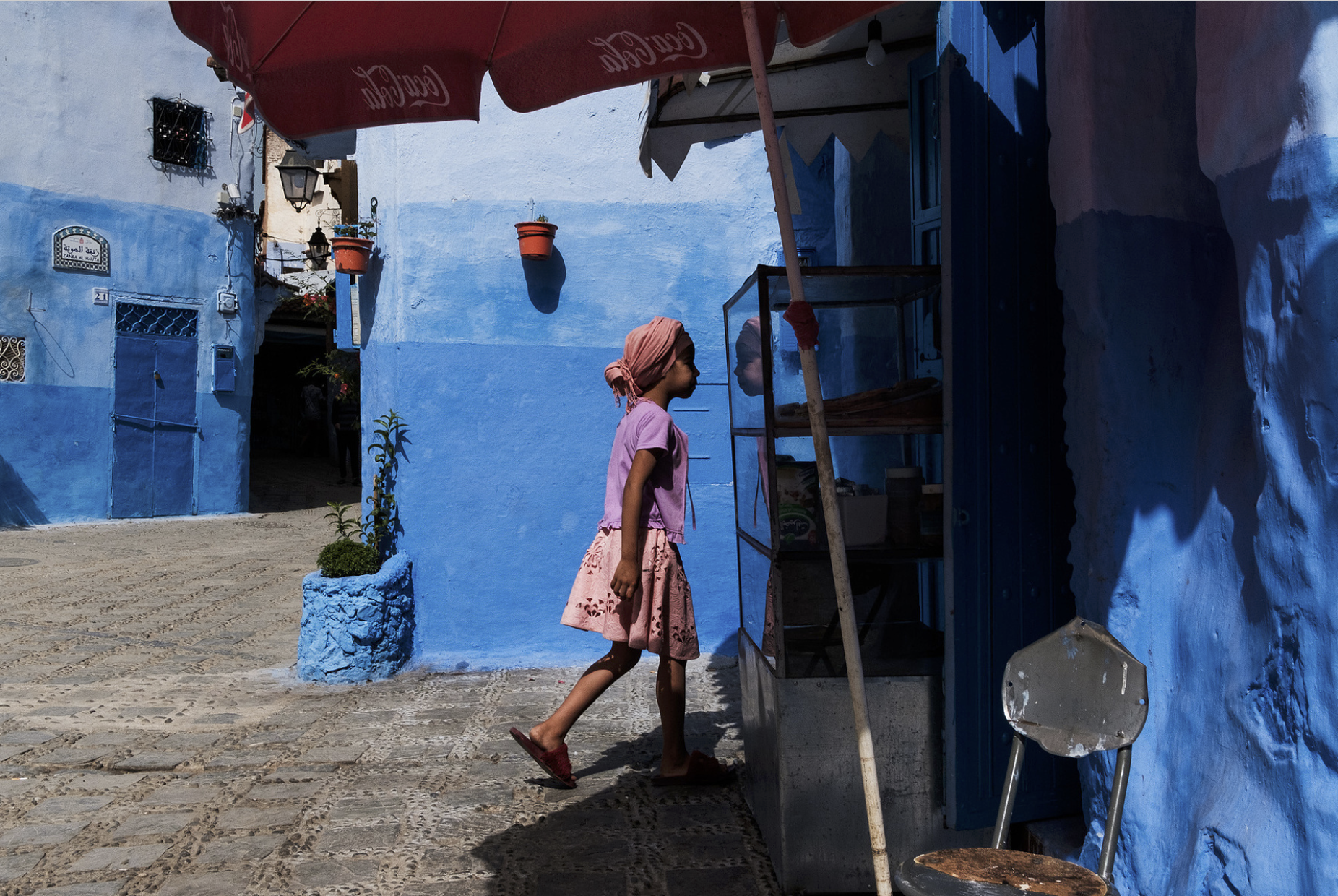
It depends on the individual and on how much they practice, because it is practice and repetition. If you’re out every day, even just composing with your eyes when you haven’t got a camera with you, you’re filling your banks of ideas and compositions. It’s like any competence. When you learn to drive, you start off not knowing, and you’re rubbish. Then you kind of know what you’re doing, but you’re still rubbish. Then you know what you’re doing and you’re good at it. And then you’re good at it and you don’t have to think about it anymore. It’s automatic.
© Polly Rusyn
Joel Meyerowitz says the camera is democratic, that everyone can use it but not everyone makes art. You teach everyone. Where do you and he actually disagree?
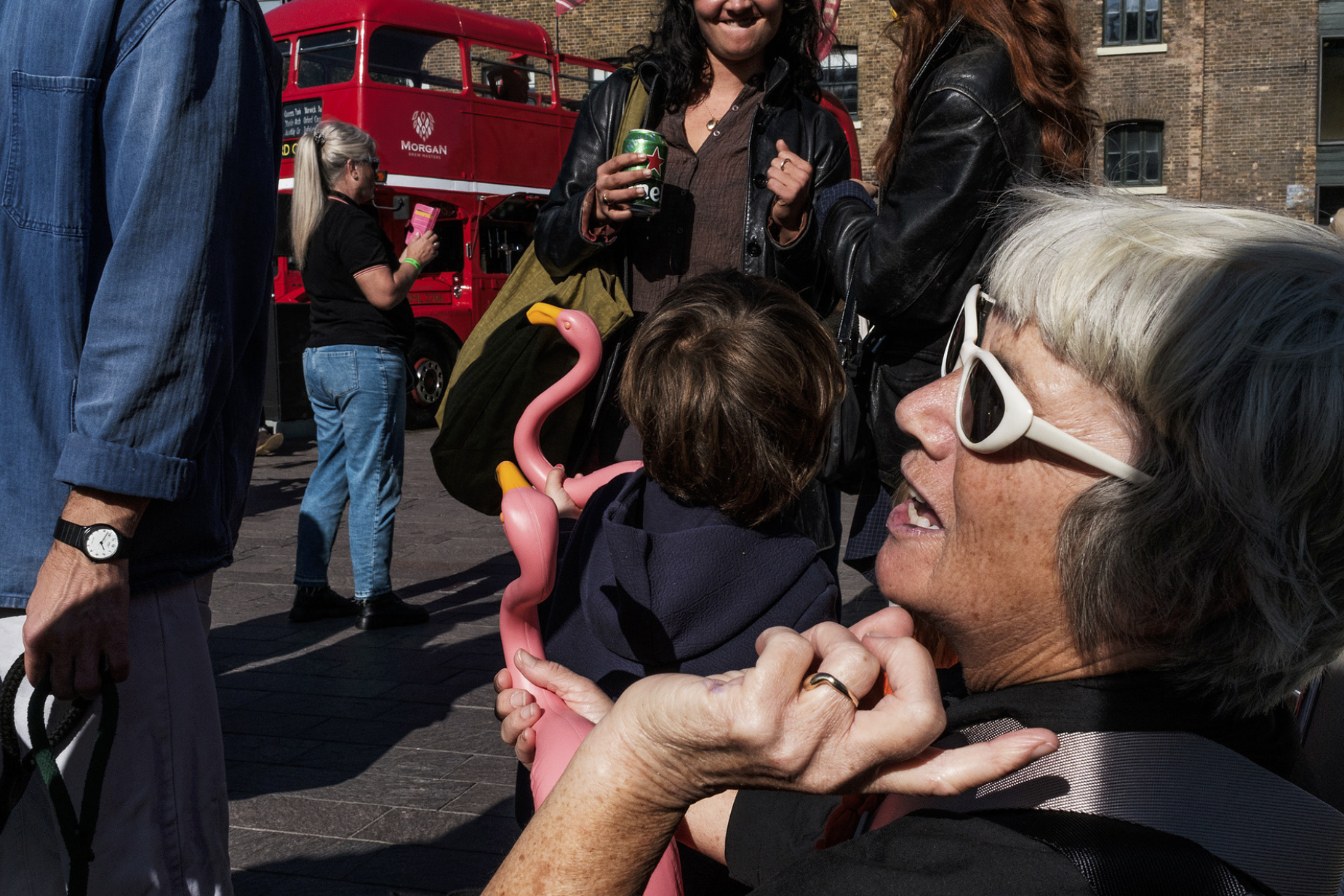
I only teach people who want to learn, so “everyone” in that sense, yes. And there’s a quote of his on the same topic that I do agree with: “We think of photography as pictures, and it is, but I think of photography as ideas.” Where I’d push back is with a different question: does everyone want to make art? Street photography fulfills many things. The desire to be creative, the desire to solve a problem, the desire to make art. Not all of it is art. For a lot of the people I work with, who have demanding jobs and plenty of spreadsheets, it’s a way to switch off. Really, everything is art. Life is art, a spreadsheet is art, engineering is art, and everything is a science as well. So I’d wonder whether he’s making a judgment or an observation.
Maybe that accessibility is exactly why the form struggles to be taken seriously as art.
And yet, another hill I’m prepared to die on: street photography is the hardest kind of photography to be good at, because it’s unstaged. If you can be good at it, you’ll be a better photographer in whatever field you shoot, even if all you do is photograph sheep in fields. It’s the most accessible form of photography, the easiest to do badly, and the hardest to do well.
© Polly Rusyn
Is there a level of the work, the thing that separates a good street photograph from a great one, that you have found you cannot teach?.
There’s always going to be the objectivity-versus-subjectivity argument. But if I stand on the hill of “everything is learnable,” I also have to stand on the hill that everything is teachable. So I can teach my objectively subjective view, or my subjectively objective view, I’m never sure which, of what makes a great photo. People can disagree.
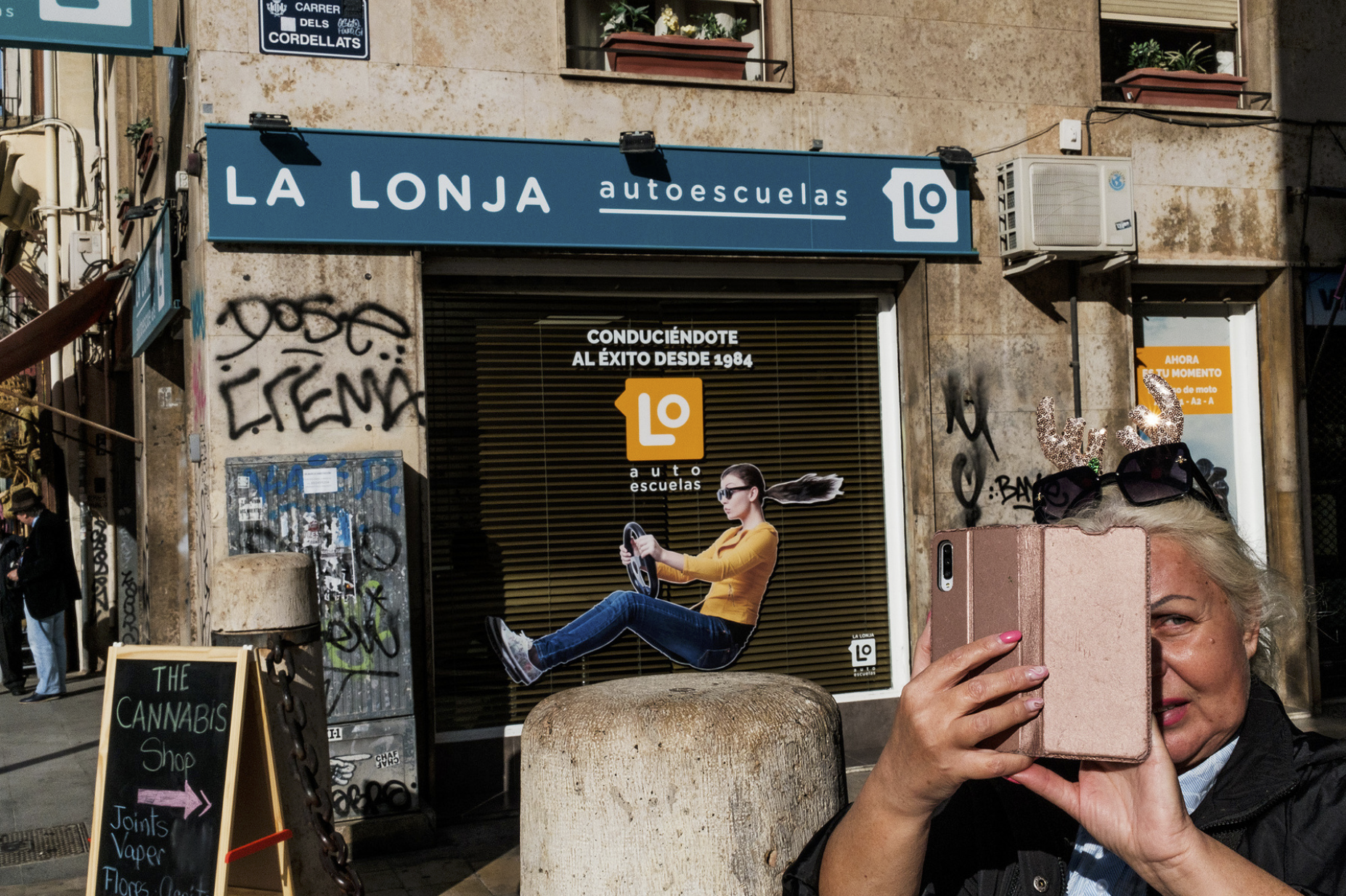
Before I started teaching the way I teach, I spent months reverseengineering photographs, because I wanted to know why I looked at a certain picture and had a physical reaction to it. There is always one element that feels intangible, and it’s usually the emotion the picture evokes. Emotion can come through the expressions and gestures, but also through color and light, and through the space, or the lack of space, in the image. That’s where it gets personal, because we all see the world through our own filters. But the elements are there. When you have all of them, you have a great shot. Some of them, a good shot. None of them, a bad shot.
What about the photographs that have some of those elements and still look like a thousand others?
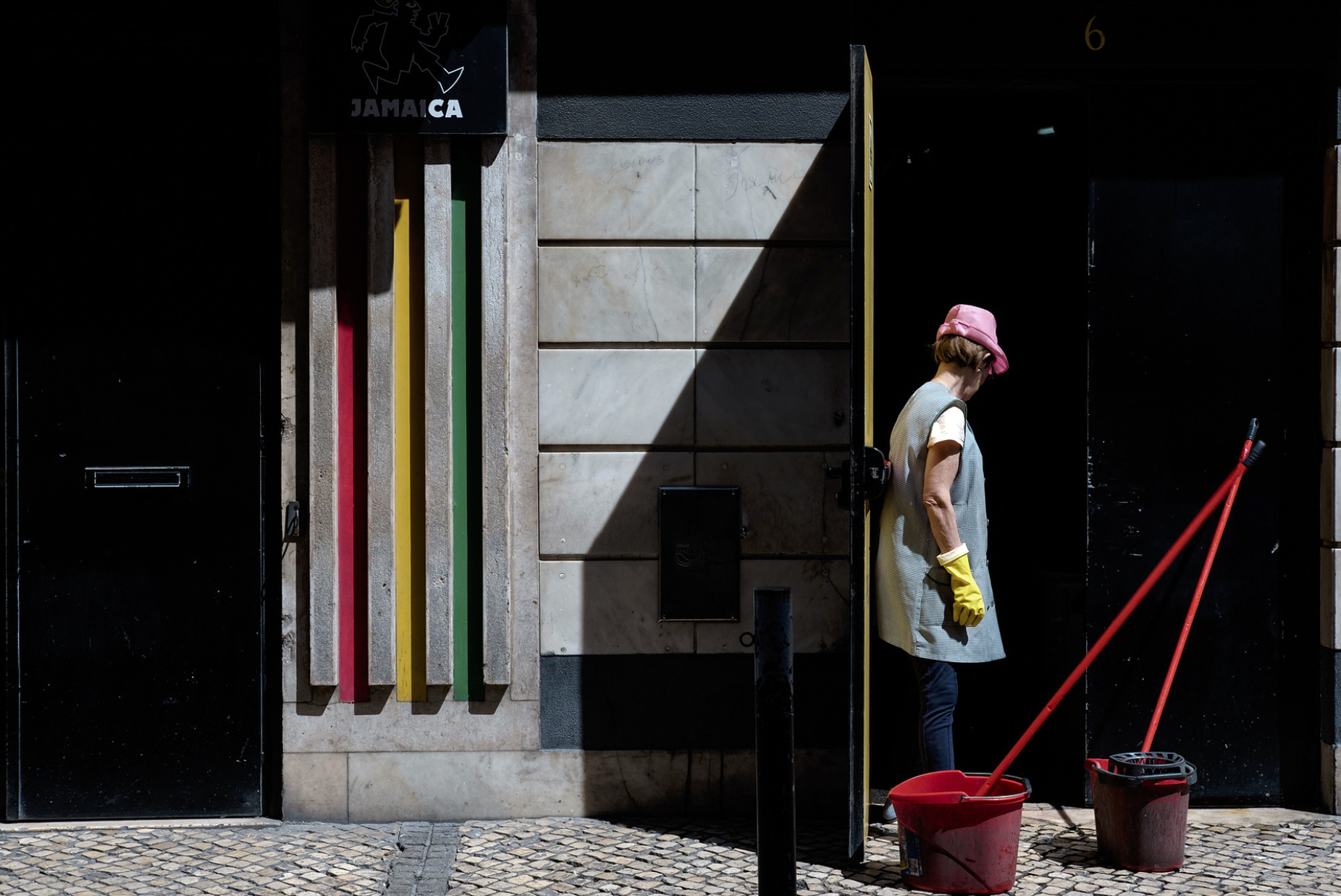
I always tell people on my workshops to aim for a moment that is not replicable. It’s so unique that you caught it. Not like the photos of a wall where, at three in the afternoon, you get a diagonal shadow and all you do is wait for someone to walk past. It’s colorful, it’s contrasting, it does well on Instagram, and it’s completely replicable.
But when the light, the background, what’s happening and the moment all come together, worlds converging, that’s the special thing. But a great moment will always trump the composition. If you’ve got a really great moment and your composition is a bit messy, you can get away with it. You can’t get away with a boring moment and a great composition.
© Polly Rusyn
You describe shooting as an active meditation, a flow state where the picture is the only thing you can think about. When you teach, are you teaching a craft or a way of being, and can a flow state be ta
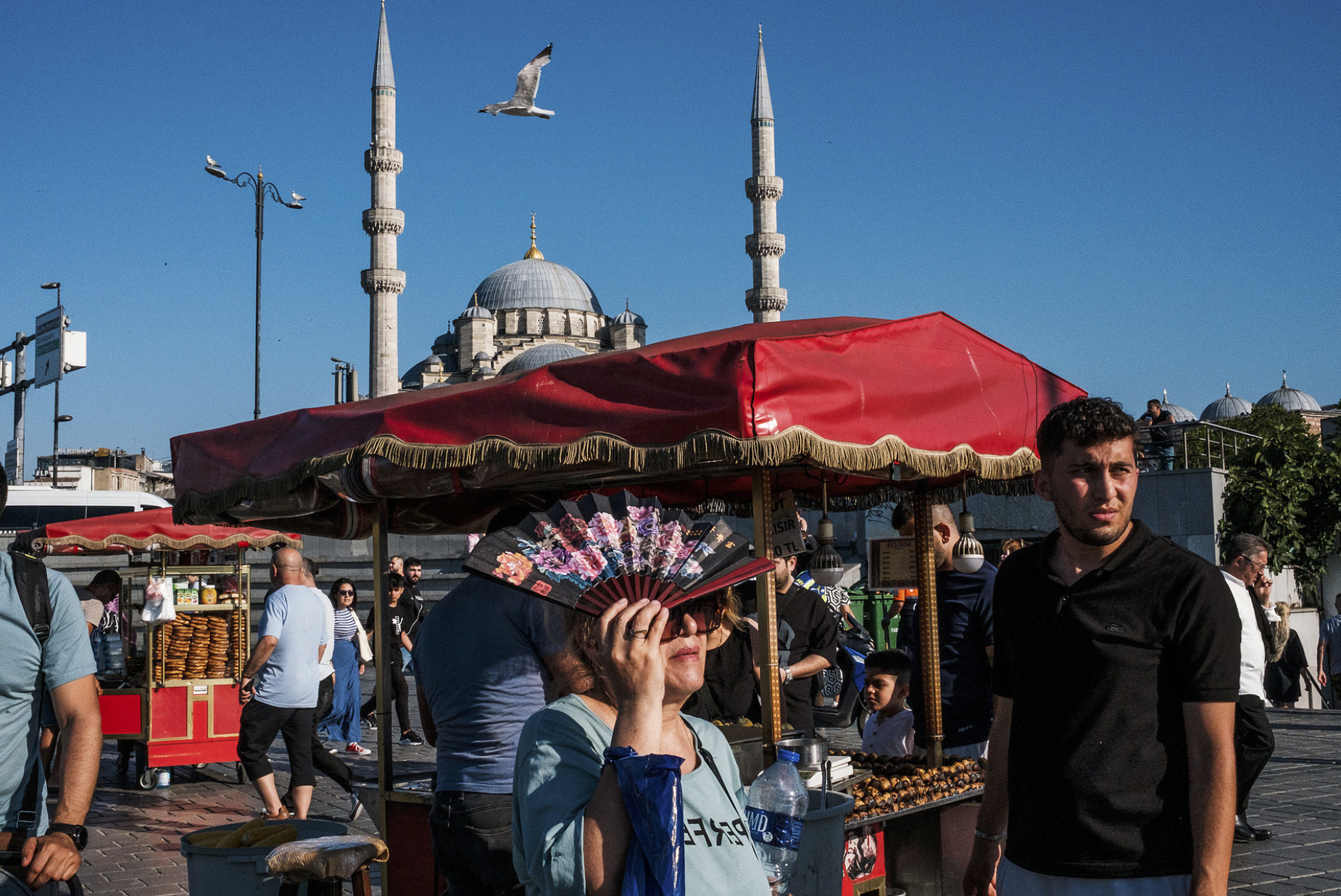
I mostly talk about mindset. Often you’re given an assignment and the first thing you think is: oh, that’s difficult. It’s about catching that, being aware of what you’re telling yourself and changing it in the moment. Henry Ford said, whether you think you can or you think you can’t, you’re right. So catch it and change it, even if all you do is add the word “yet.” I can’t do this... yet. In London recently I told everyone: it’s Saturday afternoon on Oxford Street, it’s very overwhelming. If at any point you’re thinking, oh my God, feel your feet on the ground. Stop and breathe. Just watch for a while, rather than thinking “I must take pictures.” Flow comes from being grounded and relaxed. You can’t get into flow if you’re anxious and overwhelmed. It’s neuroscientifically impossible. And a big part of it is forgetting that other people are there. Losing your self-consciousness lets you into the state where you’re just in the camera, just seeing the world.
So you can teach the conditions for flow. But any teaching requires participation. I never stand people in one spot and say, “there’s the photo.” I give the tools, and then I watch people get frustrated, and invariably they surprise themselves, and things often click into place after the workshop. The final step belongs to the person you’re teaching: I accept what you’re giving me, I’m going to absorb it and embody it.
© Polly Rusyn
If everything is learnable, what are you still trying to learn?
I will never stop learning. If one day I wake up and say I have nothing left to learn, I will punch myself in the face. I’m still learning how to stay grounded whilst traveling, and how to find pockets of routine in such a disruptive way of living. I’m still learning about myself and how I operate on a deep level. I’m constantly iterating how I teach photography: a better way to explain something, a clearer way, or something new I’ve noticed that I can share. And I’m still learning how to apply what I teach to my own photography.
© Polly Rusyn